Building Confidence, Identity & Belonging
Long-Term Relationship
Looking Ahead
 The Weight of What Was Taken
Spring 2026
More than 400 years ago, the Mashpee Wampanoag were the first Indigenous peoples to encounter the European colonists whose arrival would profoundly reshape Turtle Island. They encountered the Pilgrims at Plymouth in 1620.
What followed were centuries of colonization, genocide, forced displacement, and, not dissimilar to other Tribes, efforts to replace Wampanoag language and culture. Eventually, the Wôpanâak language fell silent, with no fluent speakers remaining.
But the story did not end there. Because harm cannot be the end of the story.
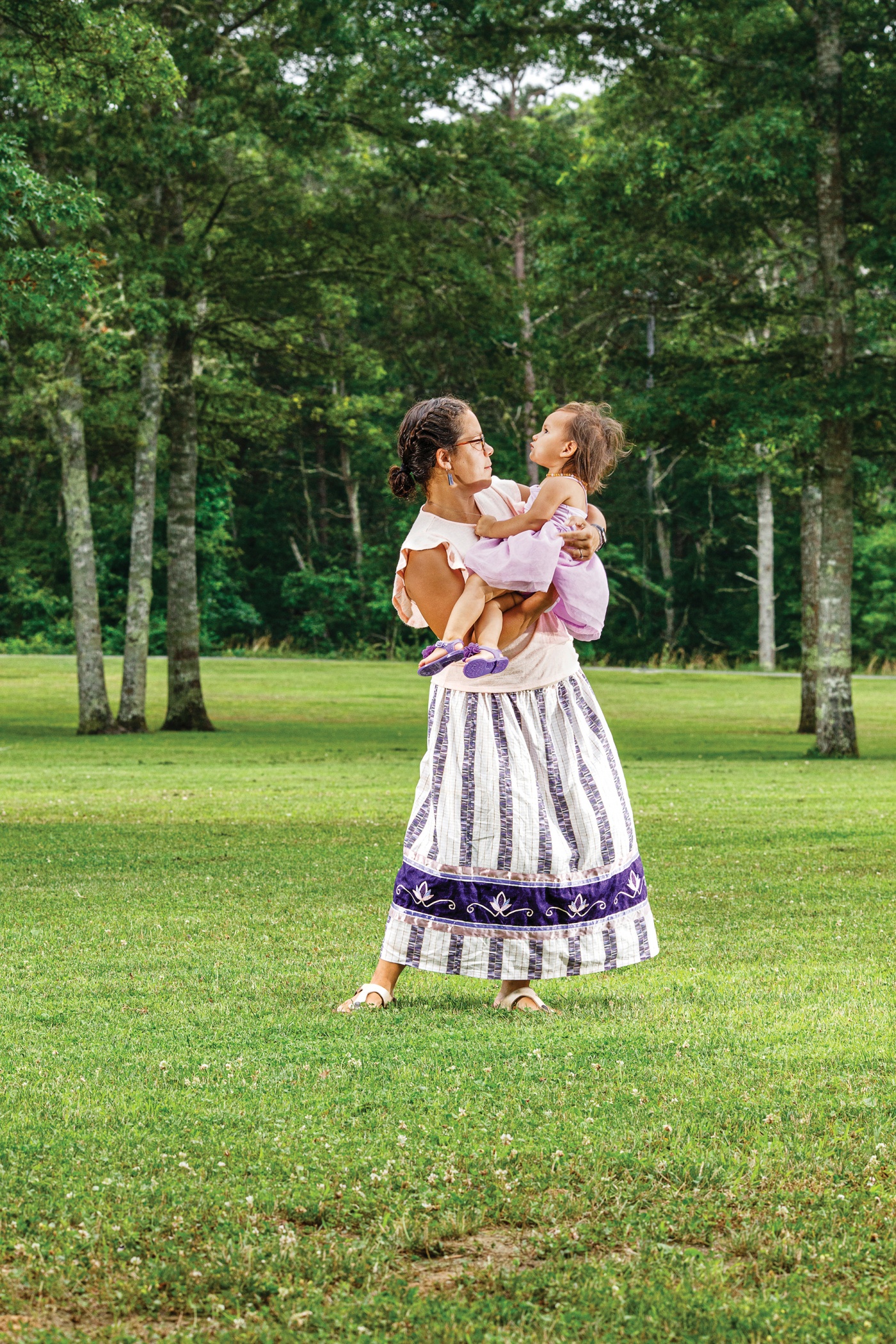
The Wampanoag became the first Tribe in U.S. history to bring a language back into use after generations without a fluent speaker. Today, the remarkable revival is taking root among the youngest members of the Mashpee Wampanoag Nation.
A Language Comes Home
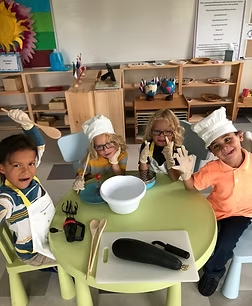
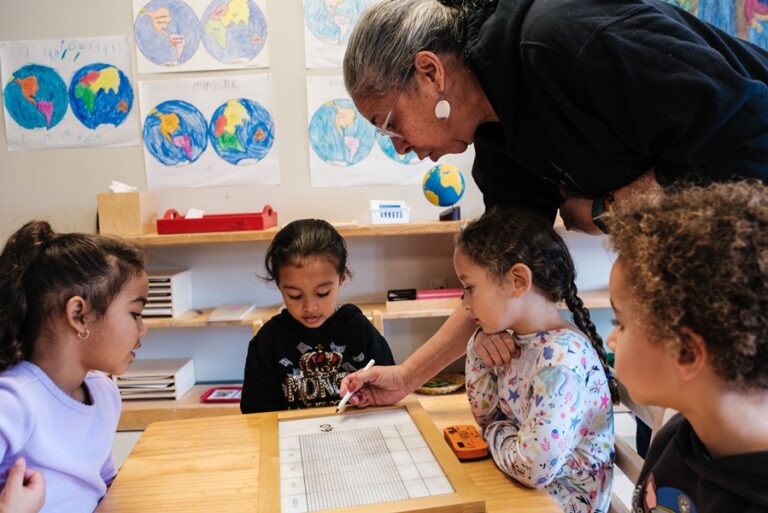
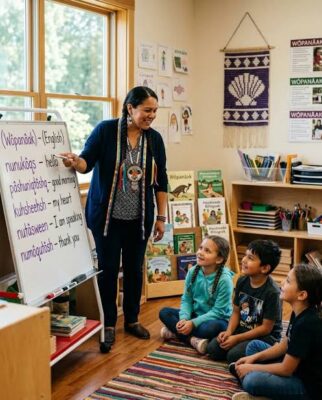
At Weetumuw School, children learn, play, and talk with one another in their ancestors’ language.
Founded in 2016, Weetumuw is part of the Tribe’s ongoing efforts to reclaim language and strengthen cultural identity across generations. Its culturally grounded Montessori approach, known as “Wampessori,” combines Wampanoag language, culture, and traditional knowledge with rigorous academic learning. The goal is to prepare children for success both within their Tribal community and in the broader world, while fostering a deep sense of identity, belonging, and responsibility to future generations.
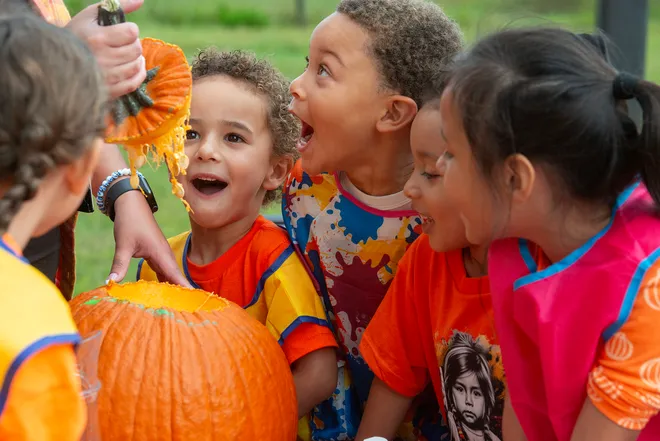
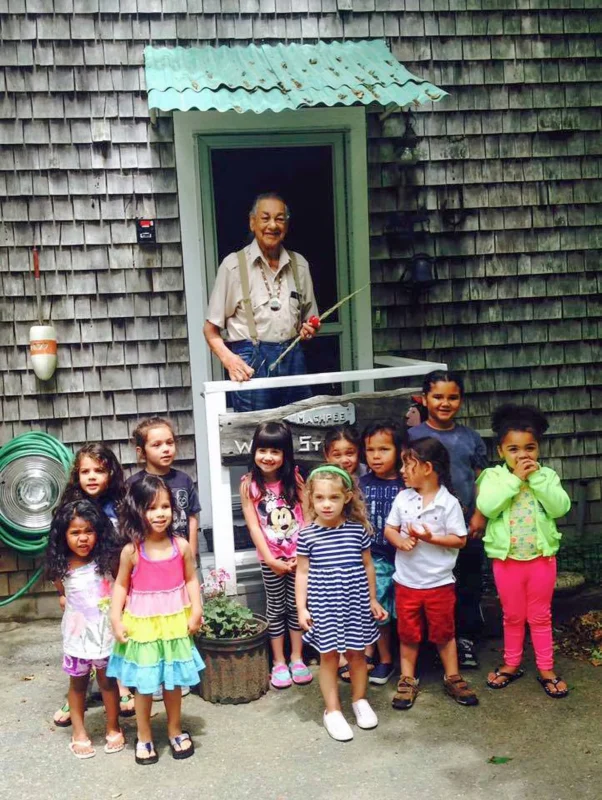
Elders, clan mothers, and other culture keepers regularly visit classrooms to share stories, songs, and traditional teachings. Monthly meal shares, feast days, and family gatherings bring parents, grandparents, and children together, helping carry Wampanoag language, cultural knowledge, and traditions between school and home.
Together, these experiences help reconnect generations through language and culture. Children aren’t simply learning about their Wampanoag heritage; they’re growing up immersed in it, with knowledge and traditions they can one day pass along to future generations.
For Dr. Nitana Greendeer, Weetumuw’s director, this work is about more than language preservation or academic achievement. It’s about helping children grow up confident in who they are and grounded in their community.
“They don’t all have to understand how colonization happened to them,” she explains, “but to be able to see that there are multiple ways to do this and that their way is a good one; that’s where it starts.”

Building Confidence, Identity, and Belonging
For Allyssa Hathaway, whose son Kadaj spent seven years at Weetumuw, the school’s impact is deeply personal:
“To have family, those you grew up with, your tribal community—teach your child for seven years has been one of the greatest blessings from this school. Knowing that my son entered school every day on our ancestral lands, learning our language, embracing our culture, and most importantly, stepping into a space of compassion, has been a profound gift.”
A strong sense of identity and belonging can also shape how children navigate the world around them. At Weetumuw, that means learning to approach others with humility and compassion, taking responsibility for mistakes, and repairing relationships when harm is done.
Those values were put to the test when six Weetumuw graduates transitioned together into a much larger public school. During their first year, one student wrote hurtful graffiti about classmates in a school bathroom.
“The way that they were able to address it with each other was—for nine- and 10-year-olds—really, really impressive,” recalls Nitana. “She really went out of her way to make it up to them. But not before they let her know what that action had done. And everyone’s fine now, and everyone’s still friends.”
I want our kids to be confident, and that they are set up for whatever’s going to come next. If whatever’s coming next is rigorous academics, they’re here for it. … Whatever they want to do is wide open. They absolutely can do it. – Nitana Greendeer
 Rather than allowing the conflict to divide them, the children spoke honestly about the harm, held one another accountable, and made room for forgiveness and reconciliation.
For Nitana, moments like these offer a glimpse of what generational healing can look like: children grounded in their identities who understand that strength includes treating others with dignity, acknowledging mistakes, and learning from them.
“At this point, it’s still kind of early to say we’ve transformed a generation,” she says. “But that’s the dream.”
Families see that value firsthand. One mother, whose children have attended both Weetumuw and public schools, chose to return her daughters to Weetumuw, where her youngest is now thriving. Her decision reflects something Nitana believes is central to the school’s success: “We can give statistics, and I can give research, but in my community, it really does have to come from the people.”
Weetumuw’s goal is to prepare children to thrive wherever their educational journeys take them, grounded in their Wampanoag identity and equipped with the confidence to navigate new environments. That preparation extends to how they approach others—with humility, compassion, and accountability.

What Long-Term Partnership Makes Possible
Launching a school is no small undertaking, particularly one rooted in language revitalization and cultural reclamation. Weetumuw began as a program within the Tribe’s broader language revitalization efforts and has gradually evolved into an independent school. That transition brings new challenges, from establishing governance and administrative systems to developing educators, securing sustainable funding, and meeting the needs of a growing student body.

Better Way Foundation began partnering with Weetumuw in 2023, providing $625,000 in support to date as part of its commitment to nine-year partnerships with Indigenous communities. In just three years, the school has made significant strides toward becoming a sustainable institution, supported by a partnership that extends beyond grantmaking.
When Weetumuw faced a funding shortfall in 2024, Better Way contacted three dozen prospective funders in the region and organized two in-person gatherings to introduce the school and its work. Those efforts helped Weetumuw meet its 2024 budget and secure funding for 2025, creating greater stability for its staff and students.
 Beyond mobilizing additional funding, Better Way’s early investments helped Weetumuw reorganize administrative responsibilities, allowing Nitana to devote more attention to academic programming, family engagement, and fundraising. Better Way also helped reconnect the school with the Wildflower Schools network, opening the door to operational support, teacher development, and fundraising expertise.
Meanwhile, Weetumuw is establishing its first Board of Directors, including Tribal leadership, strengthening its governance while preserving the school’s independence and connection to the Mashpee Wampanoag community. Each year, the school has retained between 90% and 100% of its teachers and staff, providing important continuity for students and its language revitalization efforts. All educators have also been Montessori trained.
Together, these developments have given Weetumuw something that was once difficult to imagine: the ability to plan beyond the next school year.
2024 Funder Dinners
Two gatherings gave regional funders a chance to meet Weetumuw’s leaders and hear about the school’s work directly from them.

36
Funders contacted

2
In-person dinners, in Boston and on Cape Cod

40
Guests total

2024
Budget met and 2025 secured
The School It Is Becoming
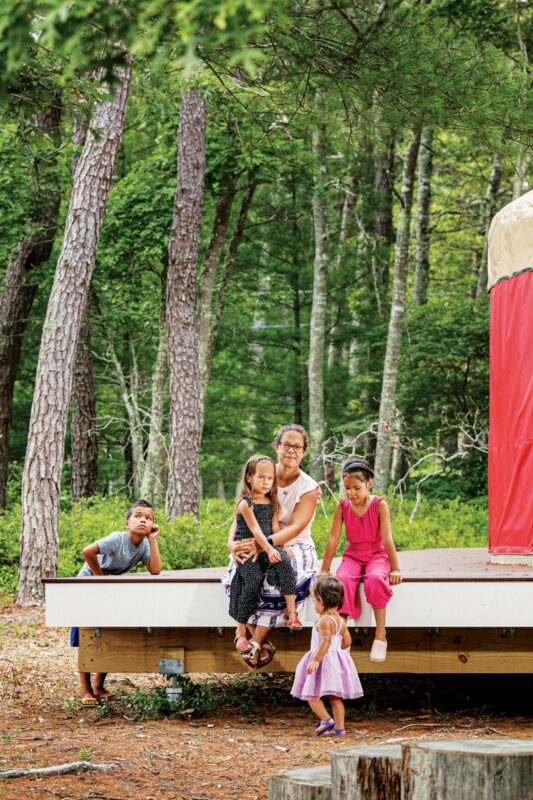
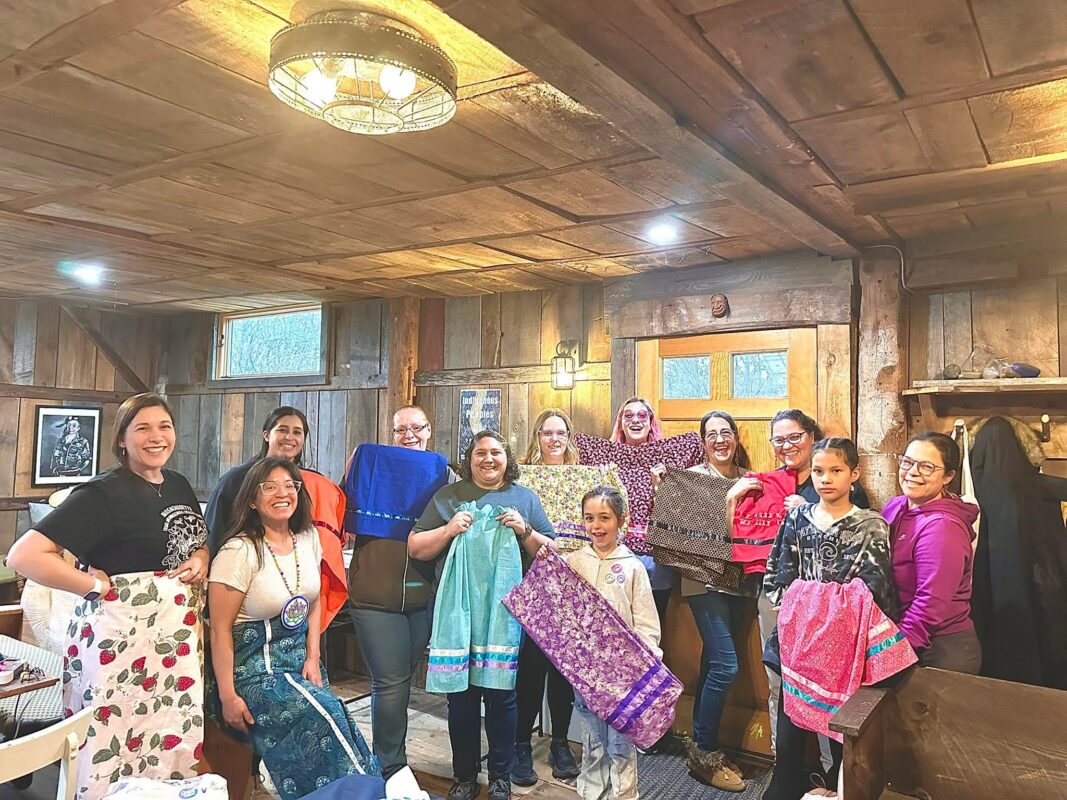
Weetumuw hopes to grow from 14 to 40 students over the next five years, expand through sixth grade, and eventually establish a permanent home on ancestral lands. That growth would allow more Wampanoag children to experience a culturally grounded education—and remain immersed in their language and traditions for more of their formative years.
For Nitana, the vision is about more than a larger building or additional classrooms.
“It wasn’t just a bigger school on our ancestral lands. It’s a school that can speak for itself, in its own voice, to the world.”
Through language revitalization, culturally grounded education, and sustained community investment, Weetumuw is helping ensure that the language and traditions generations of Wampanoag ancestors fought to preserve will continue to live through their children and generations yet to come.
Five Year Goal:
Grow from 14 to 40 students
Expand through 6th grade