That tension shaped my life.
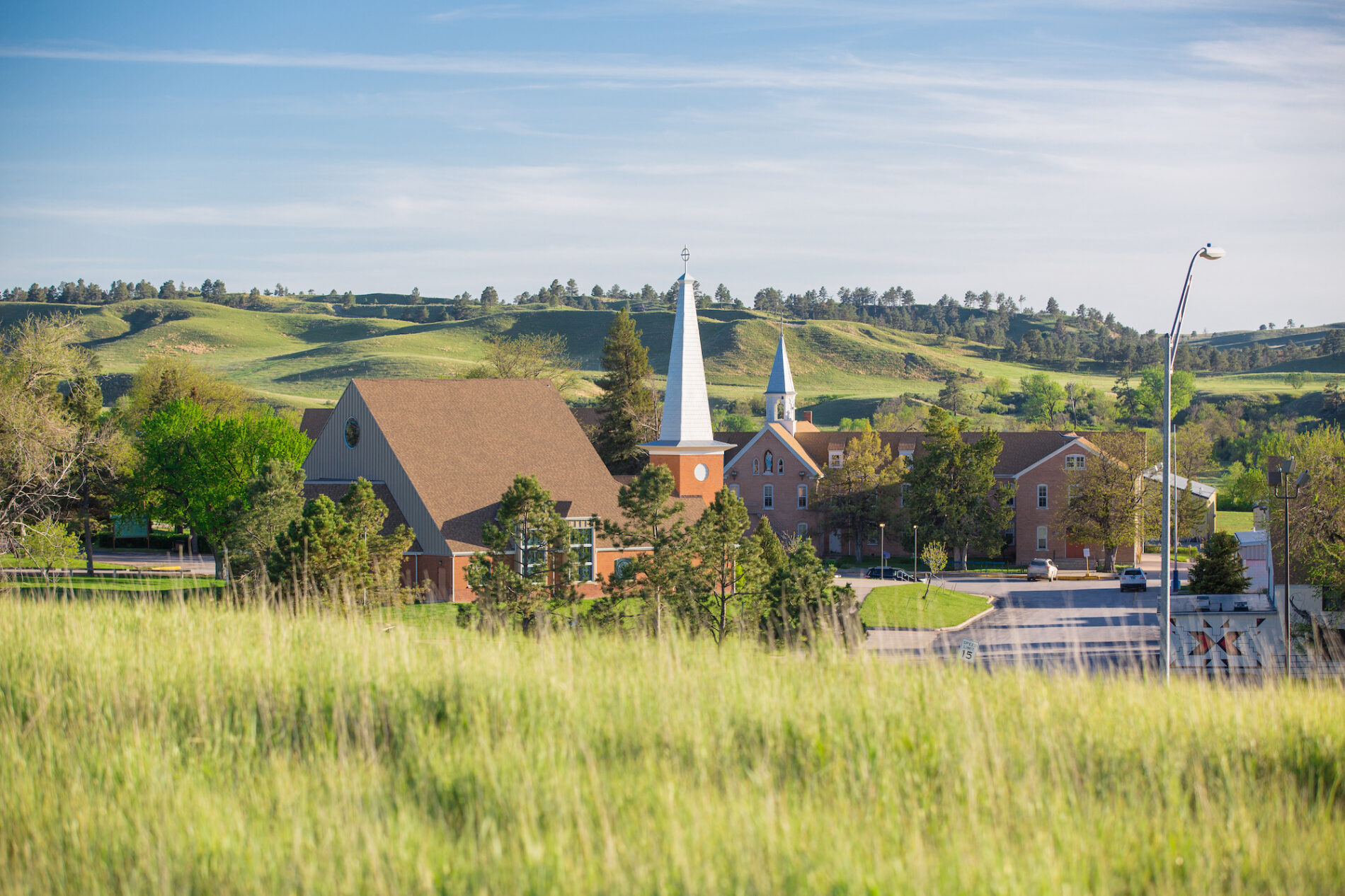
I was born on Pine Ridge. My mother was my first teacher. She gave me our language and our culture before I entered any classroom. I attended Holy Rosary Mission —now Mahpíya Lúta-until 10th grade.
I know what it means to carry both memory and contradiction. I know what it feels like when language is silenced-and what it takes to bring it back. When my family was relocated to Los Angeles through the Bureau of Indian Affairs relocation program, I saw how disinvestment affected Native families, especialy in healthcare. I helped launch clinics in Los Angeles and San Diego to serve our people.
But my heart was always on Pine Ridge.
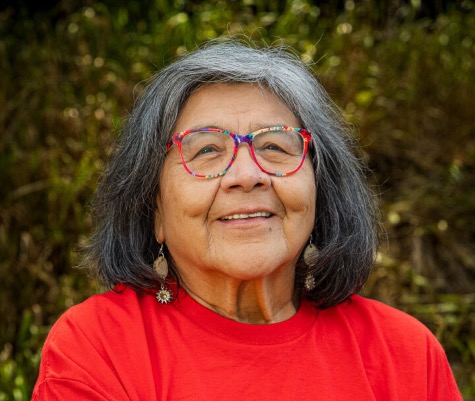
I came home to Pine Ridge in 1986, worked as a nurse, helped start the Oglala Lakhóta Women’s Society, and in 2004, I became the first female President of the Oglala Sioux Tribe. My path—from healthcare t o governance to education—has led me to one truth: If we do not tell our own story, someone else will. And they will not tell it with our language, our memory, or our spirit.
For years, our school carried its history quietly. In 2020, guided by a 10-member Community Advisory Council of alumni and elders, Mahpíya Lúta chose a different path: W e would not walk around our history—we would walk through it. Together, we began a formal truth and healing partnership with the Native American Boarding School Healing Coalition. The Council shaped the work—ground-penetrating radar, reconciliation of records, story gathering, language revitalization-each strand rooted in community voice. Healing, w e learned, does not move in straight lines. It grows like t h e Three Sisters-Corn, Beans, and Squash-rising from shared soil.
The soil is story.
So, we began by listening.
“We must walk through truth to reach equity.”
– Donald Warne, Oglala Lakhóta, MD
The school serves 500 students, alongside The Heritage Center, which engages 300 Native artists each year.

Story as Ceremony
By 2024, we had recorded 54 interviews with former boarding school students. Each conversation opened the same way:
Tell me the good. Tell me the bad. Tell me what was ugly. We do not extract stories. We receive them. We hold them as ceremony.
People trust me; they tell me things they would never tell anybody else. And all it is—is about removing that pain that is no longer inside of you.
In the telling, a quiet insight emerged. Survivors described a dividing line in their experiences: Whether they had spoken Lakhóta at home before arriving at school. That memory reshaped the institution’s future. Language immersion became not only an academic strategy, but a measure of healing.
Language immersion stopped being an academic strategy. It became a measure
of healing.
Today, 80% of our students participate in Lakhóta immersion and 70% of our teachers are Lakhóta, up 25% just five years ago. Students study Lakhóta from kindergarten through 12th grade. In 2024, five students became the first in South Dakota to earn the Lakhóta Biliteracy Seal.
But the real change isn’t in the numbers. It’s in the hallways.
Children now speak Lakhóta in the same place where that language was once silenced.
On my birthday, my students gathered around me and sang in Lakhóta. One by one, they hugged me.
That’s the healing that happens here.
These children are healing me, and I am healing them.
Today, students study Lakhóta from kindergarten through 12th grade. In 2024, five students became the first in South Dakota to earn the Lakhóta Biliteracy Seal, demonstrating proficiency in both Lakhóta and English while contributing to an all Lakhóta podcast.
Investments in multimedia tools, literature, and family-based learning are bringing the language back into homes and daily life.

Healing Woven into the Institution
Our Community Advisory Council guides this work-shaping priorities, advising research, and ensuring cultural knowledge leads. Their presence anchors the institution.
Students take part in that reckoning. Through the Mahpiya Lúta Summer Research Institute at Marquette University, they explore boarding school archives, sometimes uncovering pieces of their own family histories. From kindergarten through 12th grade, they learn the full story of their community’s relationship to the Church and the land. The school refuses to address the gaps. In 2023, deepening its commitment to language immersion and healing as core measures of success, Mahpíya Lúta maintained Cognia certification for meeting rigorous educational standards.
When youth protestors challenged our history, we opened our doors. We offered food, water, shelter, microphones, and time. We listened. An elder eventually stood and said, “We came here expecting a fight. They’re not fighting us. Maybe we should think about trust.”
Trust changes things.
And that trust reached Rome. The Superior General of the Jesuits visited, apologized, and personally carried forward our request to denounce the Doctrine of Discovery.
Meanwhile, the Council presses forward—digitizing archives with Marquette University and the Native American Boarding School Healing Coalition so that 100 years from now, my great-granddaughter will be able t o punch in my name and find m y full story.
To know where you come from is t o know who you are.

Power Has Shifted
Indigenous staff representation has grown from 25 to 70% in five years. A Traditional Cultural Specialist guides sensitive decisions. we formed a Mission, Identity, Truth & Healing Task Force.
When students raised concerns that mandatory Mass felt like colonization, we did not dismiss them—we listened. The Task Force is exploring how Catholic and Lakhóta identities might coexist without one eclipsing the other.
Mahpíya Lúta is making up for years of erasure and harm because everybody here is speaking Lakhóta. This is what it looks like when a community chooses to walk backward into the future-seeing clearly, healing deliberately, and raising leaders who will add their own chapters to the story.
What Partnership Can Look Like
When we partnered with Better Way, the foundation made a long-term commitment, a commitment that centered on learning, flexibility, and integrity. When our Council asked to pause radar work, the pause was honored. When leadership transitions required deeper elder guidance, the partnership remained steady. Rather than impose timelines, Better Way invested in trust-trust in the Council, i n community voice, i n multigenerational change.
That trust has rippled outward. Through the American Indian Catholic Schools Network at Notre Dame, Mahpíya Lúta now mentors other institutions engaging their own truth and healing journeys.
At Mahpíya Lúta, elders tell truth. Children speak language. Archives preserved.
The institution itself is being reshaped
“There’s not a Native person alive whose life hasn’t been impacted by the boarding schools’ history.”
— Tashina Banks Rama
Executive Vice President, Mahpíya Lúta
A Note from a Story Gatherer
I entered Better Way’s evaluation of former Catholic boarding schools with both shield and apprehension. Members of my own family were taken to boarding schools—separated from our mountains, rivers, and grandparents. I know the ache of birthdays without a parent’s embrace. I carry that echo.
So, I stepped into these conversations with care. After prayer and speaking with family who knew Better Way’s work, I chose to open myself to the stories. Listening to Cecelia Fire Thunder speak with honesty and nuance left me saddened, yes, but also hopeful. Perhaps one of my own ancestors experienced moments of kindness amid the harm. I might not have allowed myself that possibility without this work, without Better Way trusting us to gather stories and build relationships.
Not al boarding schools are in the same place on the journey toward truth and healing. But I leave these conversations believing that when we lead with truth, Indigenous education can be transformative. Pacific voyaging traditions teach that we walk backward into the future–looking to our ancestors to guide the path ahead.